


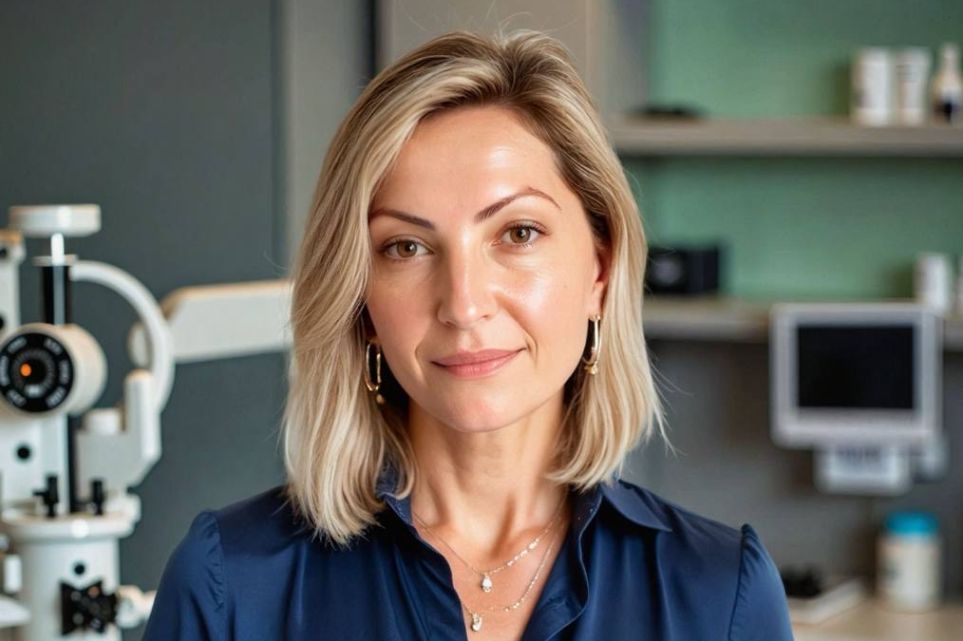
Olena Soltys, the founder of a light-therapy development company, a NASM-certified specialist, and a graduate of a Yale psychology course, talks about how a business can grow in the medtech sector and why its future lies in humanity.
Creating Value in the World of Medical Technologies
Supplying medical equipment is not classic retail. You cannot launch advertising and expect profits within a few days. Having rejected aggressive marketing that sells a “miracle,” Olena chose the path of evidence.
“One of my business branches is special. I sell professional equipment for laser light therapy (Red Light Therapy), which helps patients reduce pain symptoms, including chronic pain,” Olena says.
Success in this niche rests on three pillars: deep consulting, market education, and the ability to see value beyond the hardware. And it depends not so much on the number of units sold as on how deeply they are integrated into the client’s practice.
Why Is It Difficult for Innovations to Enter the Market?
The problem with most new technologies is that they try to compete with “magic” pills and creams. However, in business it is necessary to clearly distinguish between marketing and real results.
“Today, clinics are not looking for just another fashionable, modern device. They are interested in a solution that addresses several tasks at once,” Olena says. And she adds: “This is exactly what red- and blue-spectrum light-therapy equipment is. It both effectively supports recovery after injuries and is used as part of aesthetic treatment courses.”
The “Business-to-Business” Strategy from the Inside
When building or scaling a business based on the sale of innovative medical equipment, it is worth acting systematically:
- Integration into protocols. You are not selling a box with a laser, but an entire methodology. A physician must understand how the device fits into a protocol for treating arthritis or for re-adaptation to sports loads.
- Evidence-based approach. No clinic will purchase a device if the manufacturer does not provide clear wave parameters. If the spectrum “floats,” the LEDs flicker, the result will also be unstable.
- Mentoring support. Post-sale service sometimes costs more than the device itself. Olena focuses on team training, technical support, and sharing the latest scientific findings with physicians.
- Standardization of processes. For a business to grow without losing quality, every client — from a small office to a chain clinic — must receive an identical level of service.
Selling equipment is only the initial stage of a large partnership cycle. “You need to think more broadly and plan ahead: about support and development together with the client,” Olena admits.
Reputational Capital as an Inexhaustible Engine of Growth
“In medicine, reputation is the hardest currency,” Olena is convinced. Her business path is successful because it is based on strict selectivity. She does not work with brands that produce unreliable electronics. Just one such device is enough to destroy customer trust that has been built over years. It is definitely not worth it.
To maintain leadership, Olena relies on three principles:
- Professionalism above all. She believes that gender does not matter in business. The only things that truly matter are results for clients and ethical conduct. When everything is transparent, people trust you, and partnership becomes a natural and valuable outcome.
- Continuous professional development. Psychology courses at Yale, NASM certification in the fitness industry — Olena develops continuously. The broader the outlook, the easier it is to find non-standard business solutions and to fine-tune marketing strategies.
- Personal verification. Every device undergoes an internal audit. The quality of the lenses, the stability of radiation, the uniformity of the light flow, and the adequacy of cooling are checked. Only in this way can one be sure that patients will receive the maximum therapeutic effect.
In fact, this approach allows the company to grow not through scale, but through the depth of cooperation with each partner.
Trends and Growth Points: Where to Invest Resources
The medical equipment market in the United States is currently actively shifting toward rehabilitation and specialized centers. This opens a huge window of opportunity for businesses that offer non-invasive recovery methods.
According to Olena Soltys, the future of the industry lies in two dimensions: the intellectualization of equipment and maximum personalization. Technologies must become so precise that each cell receives exactly the amount of energy it needs at that particular moment.
“Technologies are a valuable tool, but health is the real value. Sometimes technologies run ahead, while medicine and patients are not yet ready. My task is to find a balance: to implement innovations without forgetting who they are for,” Olena shares her business philosophy.
This balance will determine the success of new medical projects through two aspects. The first is an ecosystem instead of a device. Those who win will be the ones who teach equipment to “communicate” with the patient and the physician, collect data for analytics, and show real progress in numbers.
Flexible universality is the second aspect. The market needs adaptive solutions — for example, a single device that is equally effective in sports medicine, neurorehabilitation, and dermatology.
Ultimately, it is worth investing not in “hardware,” but in trust and a predictable effect. “For my business, this means a constant search for new niches where light therapy as a technology will become the gold standard of rehabilitation,” Olena says. She adds that when innovation is reinforced by ethics and deep service, it becomes part of a new culture of health.


The Psychology of Business Resilience
In the medtech industry, the pressure of responsibility is significantly higher than in ordinary sales. Therefore, Olena integrates her knowledge of psychology into daily management not only to work with clients, but also to support her own resources. This makes a leader literally antifragile: the more challenges the market throws, the stronger the internal foundation becomes.
Focus on People
Working with patients who suffer from pain requires an empathetic attitude from the team. If corporate culture provides real support for specialists and prevents burnout, the team works more efficiently and with greater satisfaction. As a result, it maintains humanity in its interactions with clients.
Olena is convinced that only a specialist who is personally resourced and feels respect for their work is capable of fully helping physicians and patients in their recovery.
Energy Management Instead of Time Management
“For me, business efficiency is a derivative of physical condition,” Olena emphasizes and adds: “When the body and mind work in balance, everything else resolves itself. Then the impossible becomes possible.”
Morning rituals, such as yoga and meditation at five in the morning, set focus and charge energy for the entire day. Discipline in rest plays an equally important role. The ability to refuse from a social media feed or a meeting in favor of quality recovery allows one to ground oneself and make decisions with a clear head.
An Honest Business That Chooses Partners, Not Deals
Today, Olena Soltys is not so much building a distribution network as she is forming a community of professionals who believe in an evidence-based approach. When a business is built on ethics and integrity, it automatically filters out random people and attracts partners.
Innovation is not intended to replace humans with machines. The key goal is to provide physicians with effective equipment that restores the joy of movement and a pain-free life to patients.
Have you read?
From Legal Briefs to Big Screens: Stacy Kemp’s Journey into Filmmaking.
Redesigning the University: Catalina Global on the New Blueprint for Global Learning.
Playing the Long Game: Elliot Omanson’s Mission to Simplify Finance.
Beyond the Clinic: Dr. Ben Barton’s Blueprint for Profitable Medical Practices.
Climbing the Golden Ladder: A Guide to Southeast Asia’s Multi-Tiered Residency Markets.
link