





In a bold strategic shift, BD (Becton, Dickinson and Company) has placed its future in the hands of Bilal Muhsin, a veteran of medical technology innovation, to lead its newly created Connected Care segment. As the company transitions into a “pure-play MedTech leader,” its success hinges on leveraging artificial intelligence (AI), smart devices, and advanced analytics to transform healthcare delivery. With a $2.5 billion manufacturing investment, a 54-year dividend streak, and a CEO touting its “strategic reorganization,” BD is betting big on a vision that could either cement its legacy or expose its vulnerabilities.
The Strategy: From Syringes to Smart Systems
Under Muhsin, BD is abandoning its former hybrid identity—spanning biosciences, diabetes care, and surgical tools—in favor of a laser focus on connected care. The plan is to integrate AI into three core areas: connected medication management (streamlining drug delivery), advanced robotic workflows (optimizing clinical efficiency), and smart monitoring systems (real-time patient data analytics).
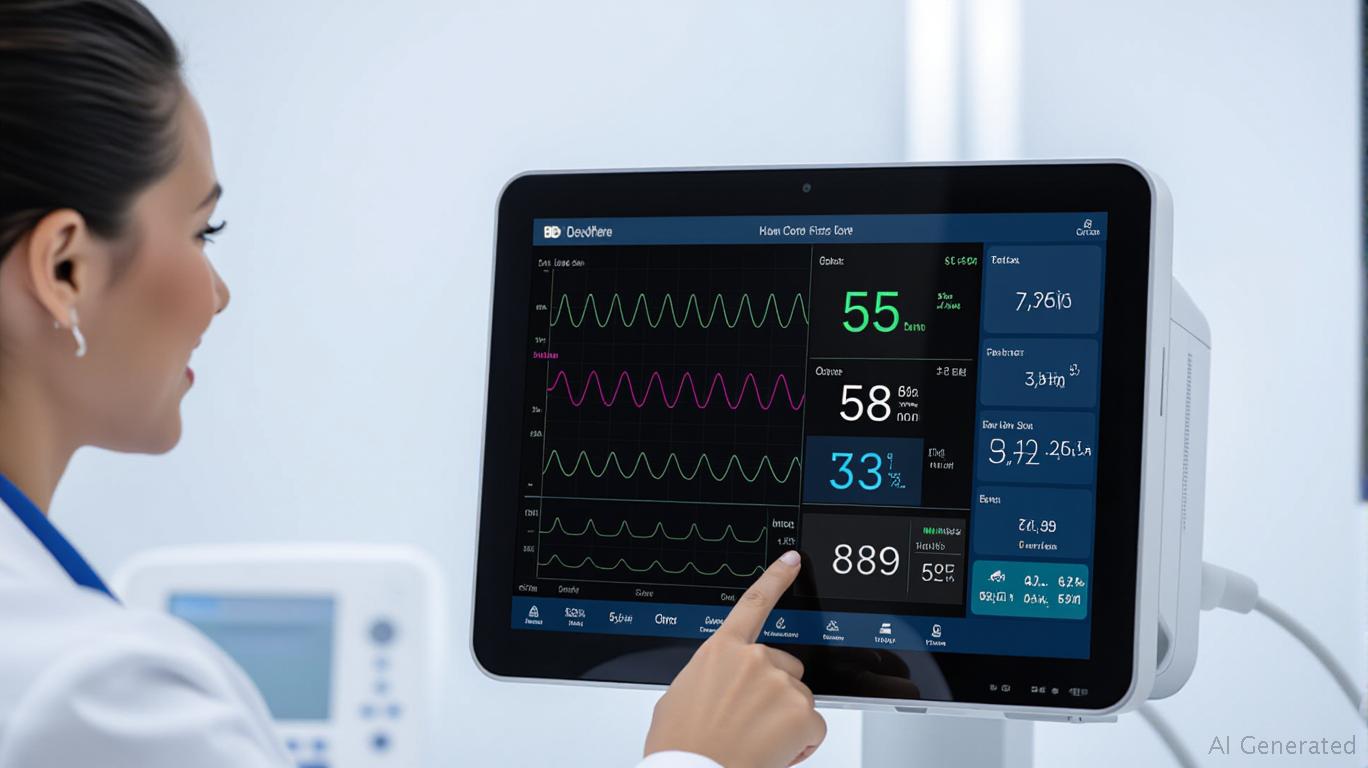
Muhsin’s credentials are a central pillar of this pivot. A former Masimo COO and holder of 50 patents in medical systems and AI, he brings deep technical expertise. His experience in noninvasive monitoring and software development positions him to accelerate BD’s push into AI-driven clinical decision support, such as its HemoSphere Alta™ platform, which already uses AI to analyze patient data in real time.
Financial Foundations: Strengths and Uncertainties
BD’s financial health provides a sturdy base. With a 46% gross profit margin and robust cash flows, the company has the capital to invest in R&D and scale AI initiatives. The $2.5 billion commitment to U.S. manufacturing over five years signals long-term confidence in demand for its products. However, the separation of its Biosciences unit—a move analysts call “strategic but risky”—could unlock value by streamlining operations but also expose BD to execution risks.
The missing piece? Specific financial commitments to AI-driven connected care. While BD’s search results reveal no dedicated funding announcements for this segment, the broader investment in manufacturing and the appointment of Muhsin suggest this is a priority. Investors will need to watch for future disclosures on R&D spend, partnerships, or acquisitions in AI and robotics.
The Investment Case: Timing and Market Potential
The MedTech sector is ripe for disruption. The global connected healthcare market is projected to grow at a 12% CAGR through 2030, driven by aging populations, telemedicine adoption, and the need for cost-efficient care. BD’s pivot aligns with this trend, but it faces competition from giants like Medtronic and startups like Philips’ connected care platforms.
BD’s strengths—its global scale (70,000+ employees, operations in nearly every country), patent portfolio, and legacy in medical devices—give it an edge. If successful, its AI-driven solutions could reduce errors, lower costs, and improve outcomes in hospitals and clinics. The dividend history is also a stabilizing factor for income-focused investors.
Risks to Consider
- Execution: The separation of Biosciences and integration of AI into legacy systems require flawless execution. A misstep could alienate customers or investors.
- Regulatory Hurdles: AI in healthcare faces strict FDA scrutiny. Delays in approvals could stall revenue.
- Market Saturation: Competitors are already deploying AI in diagnostics and monitoring. BD must differentiate itself quickly.
Analysts remain divided. Some praise BD’s focus on high-growth areas, while others caution about macroeconomic pressures and tariff impacts. The stock’s performance—currently trading near 52-week lows—hints at investor skepticism.
Conclusion: A High-Stakes Gamble with Long-Term Upside
BD’s shift under Muhsin is a bet on the future of healthcare—one where AI and connectivity drive efficiency and innovation. If the company can execute its strategy, it could capture significant market share in a booming sector and reward shareholders. However, the lack of visibility into AI-specific investments and the risks of restructuring leave room for doubt.
For investors, BD offers a compelling long-term story but requires patience. Consider a position if you believe in its ability to translate technical prowess into market leadership. Monitor upcoming product launches, biosciences separation updates, and quarterly earnings for clues on whether this pivot is paying off.
In the race to redefine MedTech, BD has staked its claim. The question now is whether its AI-driven vision can outpace its challenges—or if it’s overreaching in a sector where execution is everything.
link
More Stories
Ilepu Medical Technology In Malaysia: Innovations & Impact
Top Medtech Startups in Denmark
Australia MedTech Market Expected to Reach USD 13.9 Billion by 2033 on the Back of Demographic Shifts and Tech Innovation